


For most people, a vehicle is the second largest financial investment they will make in their lifetime, trailing only the purchase of a home. Yet, despite this significant financial commitment, the daily maintenance of an automobile is frequently relegated to standard mechanical service and the occasional trip through an automated car wash. While changing the engine oil protects the mechanical heart of the vehicle, it does absolutely nothing to shield the rest of the asset from the relentless degradation caused by the environment.
This is where regular, professional-grade car detailing becomes essential. Unlike a basic car wash, which merely removes loose surface dust and superficial dirt, detailing is a deep, restorative, and highly technical process. It focuses on sanitizing, correcting, and applying long-term defensive barriers to every square inch of the vehicle. Understanding the specific protective mechanisms of detailing reveals how this practice safeguards a vehicle’s structural integrity, interior health, and long-term resale value.
Preserving the Exterior Shield: Paint and Clear Coat Protection
The exterior paint of a car is not merely a cosmetic choice; it is a critical defensive barrier designed to protect the raw sheet metal underneath from oxidation and rust. Modern automotive paint consists of a base color coat topped with a microscopic layer of clear polyurethane resin known as the clear coat. This clear coat bears the brunt of environmental warfare every single day.
The Hidden Hazards of the Road
Even during a routine commute, a vehicle’s exterior is subjected to a cocktail of destructive contaminants. Over time, these substances chemically bond to the clear coat and begin a process of microscopic degradation.
-
Bird Droppings and Tree Sap: These natural substances are highly acidic. When left on a vehicle under the heat of the sun, they contract and etch deeply into the clear coat, permanently staining or cracking the finish.
-
Industrial Fallout and Brake Dust: Microscopic metallic shards from factory emissions and braking vehicles float through the air and embed themselves into the paint. When exposed to moisture, these iron particles rust, expanding and creating tiny pinholes in the clear coat.
-
Road Salt and De-Icing Chemicals: In colder climates, winter road treatments accelerate chemical oxidation, chewing through vulnerable paint layers and exposing raw steel to catastrophic rust.
-
Ultraviolet Radiation: Continuous exposure to the sun’s UV rays breaks down the chemical bonds of the clear coat, leading to a dull, chalky appearance known as paint oxidation.
The Detailing Solution: Decontamination and Correction
A thorough detailing process addresses these issues through mechanical and chemical decontamination. Detailers utilize specialized iron-remover sprays to safely dissolve embedded metallic particles. Following this, a synthetic detailing clay bar is gently glided across the lubricated surface. The clay safely grabs and lifts away bonded contaminants that regular soap cannot budge, leaving the paint perfectly smooth.
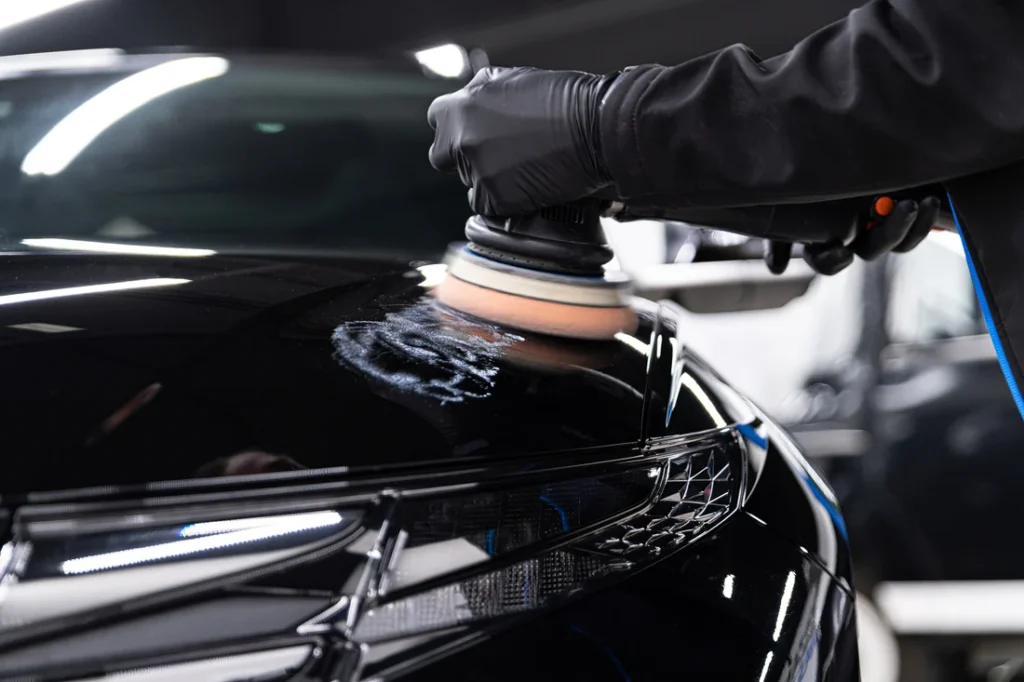
Once decontaminated, machine polishing corrects minor swirls and scratches, restoring optical clarity. Finally, detailers apply advanced protective coatings, such as high-grade carnauba waxes, synthetic polymer sealants, or ceramic coatings. These protectants act as a sacrificial barrier, absorbing the impact of UV rays and acidic contaminants so the underlying factory clear coat remains untouched.
Defending the Substructure: Undercarriage and Wheel Maintenance
While the shiny top surfaces of a car receive the most attention, the areas closest to the pavement endure the highest level of physical abuse. The wheels, brake assemblies, and lower chassis are constantly bombarded by road debris, moisture, and corrosive chemicals.
Preventing Brake Dust Etching
As brake pads press against metal rotors, they generate intense heat and create a fine powder of carbon and steel fibers. This hot brake dust settles onto the wheels. Because the particles are hot, they easily burn into the protective clear coat or paint of aluminum and alloy rims. If left unchecked, this dust corrodes the underlying metal, causing pitting, discoloration, and structural weakening of the wheel. Regular detailing utilizes acid-free, color-changing wheel cleaners that safely break the bond between the metal and the wheel surface, preventing permanent damage.
Halting Underside Corrosion
The undercarriage of a car features numerous exposed components, including suspension arms, exhaust pipes, and brake lines. Road grime and moisture trap moisture against these metal surfaces, creating the perfect environment for rust to breed. Professional detailing includes high-pressure undercarriage washing and the application of anti-corrosion inhibitors. This removes accumulated salt and mud, ensuring that critical structural components do not rust out prematurely.
Safeguarding the Cabin: Interior Material Longevity
Many drivers view interior detailing as a matter of personal tidiness. However, the interior cabin is exposed to unique stresses that can cause rapid physical decay if neglected. The combination of enclosed heat, human friction, and solar radiation makes the cabin highly vulnerable.
Protecting Leather, Vinyl, and Plastics
The dashboard and upper door panels act as heat sinks, absorbing intense solar energy through the windshield. This intense heat bakes the natural oils out of leather, vinyl, and molded plastics, causing them to dry out, fade, and eventually crack.
During a detailed interior cleaning, specialists apply deep-penetrating conditioners equipped with UV inhibitors. These products replenish the lost moisture in leather seats and create a non-greasy shield on vinyl surfaces, keeping them pliable and resistant to cracking.
Preserving Carpets and Fabric Liners
Every time a driver enters a vehicle, their shoes grind tiny particles of sand, dirt, and gravel deep into the carpet fibers. As passengers move their feet, these sharp granules act like microscopic razor blades, slicing through the carpet fibers with every step. Over time, this mechanical friction creates bald spots and tears in the floor mats. Detailing uses industrial hot-water extractors and deep vacuuming to pull these abrasive particles out from the very bottom of the carpet pile, stopping the physical destruction of the fabric.
Maximizing Asset Equity: Financial and Health Dividends
The benefits of regular car detailing extend far beyond the physical materials of the automobile. It directly impacts the owner’s financial health and personal well-being.
Preserving Resale Value
When it comes time to trade in or sell a used vehicle, its physical presentation speaks volumes to prospective buyers or dealership appraisers. A vehicle with faded paint, stained carpets, and scratched wheels indicates a general history of neglect, lowering its market value by thousands of dollars. Conversely, a car that has been regularly detailed boasts an immaculate finish and a pristine cabin, signaling excellent overall care. The cost of regular detailing is often completely recovered by the significantly higher resale price the vehicle commands.
Enhancing Driver Health and Safety
The interior of a vehicle can become a breeding ground for bacteria, mold spores, and allergens, especially within the dark recesses of the ventilation system. The average steering wheel can host more bacteria than a public restroom seat. Professional interior detailing utilizes steam sterilization to sanitize high-touch surfaces like the steering wheel, gear shifter, and seatbelts without using harsh chemicals. This process eradicates hidden pathogens, creating a cleaner, safer breathing environment for the driver and passengers.
FAQs
How often should a daily-driven vehicle receive a professional detailing service?
For a vehicle driven every day under normal conditions, a comprehensive detailing service should be performed two to three times per year. This frequency ensures that protective waxes or sealants are replenished before they wear off completely, providing year-round defense against environmental hazards.
What is the practical difference between a standard paint sealant and a ceramic coating?
A standard paint sealant is made from synthetic polymers that bond to the paint, offering reliable protection against UV rays and dirt for about six months. A ceramic coating is a liquid polymer composed of silicon dioxide that chemically bonds with the factory paint at a molecular level, creating a permanent or semi-permanent hard glass layer that lasts for multiple years and offers superior scratch and chemical resistance.
Can professional detailing remove deep scratches that have penetrated the paint?
Detailing can completely remove light swirl marks, surface scratches, and clear coat imperfections through machine compounding and polishing. However, if a scratch is deep enough to catch a fingernail or exposes the grey primer or bare metal underneath, it cannot be polished out and requires professional paint touch-up or body shop repair.
Why is an automated drive-through car wash considered harmful to a vehicle’s exterior?
Most automated car washes use heavy, spinning nylon brushes that collect dirt and grit from the dirty vehicles that went through previously. As these brushes slap against your car, they act like sandpaper, inflicting thousands of microscopic circular scratches known as swirl marks, which dull the paint’s reflection over time.
How does detailing protect the electronic components found in modern car interiors?
Professional detailers use specialized techniques for modern interiors, such as low-moisture dry vapor steam, delicate detail brushes, and electronic-safe cleaners. This allows them to deep-clean crevices around touchscreens, switches, and dashboard displays without risking liquid intrusion into sensitive wiring.
Does engine bay detailing offer any practical protection or is it purely cosmetic?
Engine bay detailing provides significant functional protection. Removing accumulated grease, road grime, and salt allows the engine to dissipate heat more efficiently. Furthermore, cleaning the area allows mechanics to spot fluid leaks early, prevents rubber hoses from drying out prematurely, and removes debris that can attract rodents looking to chew on electrical wiring.
